
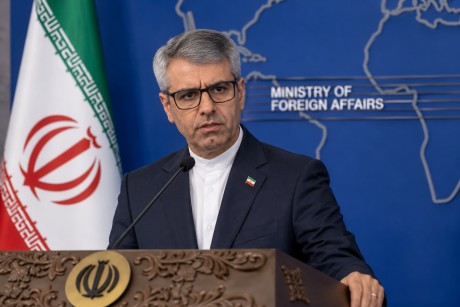
Iran has firmly denied any involvement in the conflict currently unfolding in Yemen, asserting that the Houthi forces are autonomous and make their own strategic decisions. According to Esmaeil Baghaei, the spokesman for the Iranian Foreign Ministry, Tehran refrains from interfering in Yemeni matters and dismisses any allegations connecting Iran to recent events involving Saudi Arabia and Yemen. Baghaei emphasized that the origins of the conflict are deeply rooted within Yemen itself.
Additionally, Baghaei confirmed that a meeting initially scheduled to take place in Oman, which would have involved Iran and several Gulf countries, has been postponed at the request of Saudi Arabia. The primary focus of the meeting was expected to be on regional security and collaboration. Despite the delay, Baghaei assured that an understanding between Iran and Oman regarding maritime navigation in the Strait of Hormuz has been finalized, and both nations will determine the subsequent steps independently.
Omani Foreign Minister Badr Albusaidi expressed that the postponement of the regional meeting was intended to foster consensus among the involved parties. He reiterated Oman’s unwavering commitment to dialogue, regional stability, and long-term cooperation, underscoring the importance of maintaining open communication channels in addressing shared concerns.
The talks in Oman were anticipated to serve as a platform for Iran and Oman to present their joint understanding on maritime routes in the strategically significant Strait of Hormuz. Although the meeting has been delayed, the finalized agreement between the two countries remains intact, with plans to move forward as determined by their respective governments.
In summary, while Iran maintains its stance of non-involvement in Yemen, the broader regional discussions aimed at enhancing cooperation and security are temporarily on hold, reflecting the intricate dynamics at play in the Middle East landscape.