
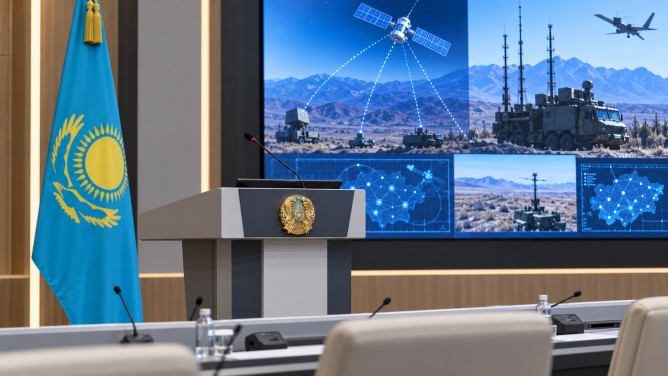
Kazakhstan’s Security Council has ratified an extensive military reform plan designed to modernize the nation’s Armed Forces, with a focus on enhancing military management and training and creating a new Unmanned Forces branch. The decision, taken during a Security Council meeting chaired by President Kassym-Jomart Tokayev on October 21, underscores a commitment to developing a modern, mobile, and technologically advanced military.
President Tokayev stressed the importance of strengthening service safety, improving command standards, utilizing public resources efficiently, and fostering better relations between the military and society. The reform plan is informed by international military experiences, insights from modern warfare, and recommendations from domestic experts. It also introduces a two-stage model of compulsory military service, where recruits will first undergo six months of training at military centers, followed by six months of service in military units to focus on combat readiness and operational duties.
Additional measures within the reform plan aim to safeguard servicemen’s rights, enhance military discipline, and reinforce safety standards. The government intends to expand military-patriotic education, establish more specialized military schools, and refine initial military training. A new information and communications strategy will be implemented, alongside strengthened educational programs based on the constitutional principle of law and order.
Organizational changes are planned for completion by the end of 2026, while the principal conceptual reforms are expected to be in place by 2027. President Tokayev has also tasked officials with completing a comprehensive review of the Defence Ministry by the end of 2026. The government and Security Council will oversee the implementation of these reforms, with military security identified as a national priority requiring collaborative efforts across relevant government institutions.