
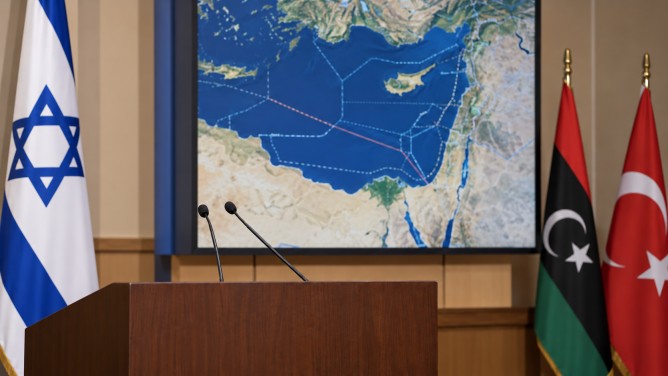
Israel has criticized the recent decision by eastern Libya’s parliament to approve a maritime agreement with Türkiye, citing concerns that the deal could adversely affect the maritime rights of regional partners, particularly Greece and Cyprus. The agreement delineates boundaries in the eastern Mediterranean, a region noted for its potential natural gas resources.
The maritime deal has already faced opposition from Greece, Cyprus, and Egypt, which argue that it conflicts with their own maritime claims. The European Union has also questioned the legal validity of the agreement, stressing the importance of respecting the sovereign rights of EU member states under international law.
In a statement, Israel’s Foreign Ministry accused Türkiye of fostering instability in the eastern Mediterranean, underscoring Israel’s strong ties with Greece and Cyprus. Relations between Israel and Türkiye have been strained in recent years, particularly due to differing stances on the conflict in Gaza.
On the other hand, Türkiye has defended the agreement as being in line with international law and beneficial to both countries involved. Turkish Foreign Minister Hakan Fidan stated that the Libyan parliament’s approval simply formalizes an arrangement that Türkiye already considered effective.
This dispute over the maritime agreement also highlights the fragmented political landscape in Libya. Eastern Libya, under the leadership of military commander Khalifa Haftar, has maintained a rivalry with the internationally recognized government in Tripoli, although its interaction with Ankara has developed over the years.
The European Union has reiterated the necessity of adhering to international maritime law and respecting the sovereign rights of all its member states. Greece has escalated the matter to the United Nations, expressing concerns that the agreement could impact security and stability throughout the eastern Mediterranean region.