
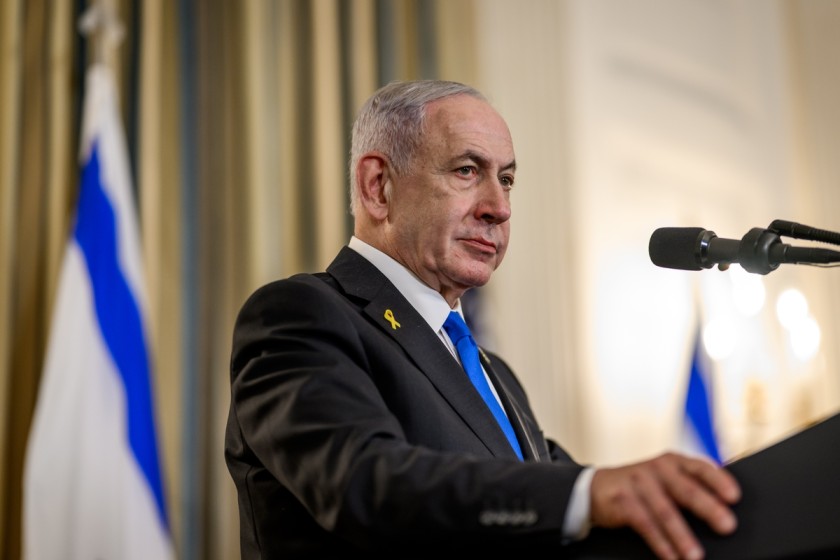
Israeli Prime Minister Benjamin Netanyahu has refuted recent claims by US President Donald Trump that Israel operates under his directives, asserting that both nations act independently in accordance with their own national interests. During his speech at the Jerusalem News Syndicate International Policy Summit 2026, Netanyahu clarified that neither leader exerts control over the other, emphasizing the sovereignty of both Israel and the United States and their commitment to prioritizing their own security and strategic goals.
Trump had previously stated in an interview that Israel respects him and “does as I say,” particularly in the context of potentially halting further Israeli military actions in Lebanon. While Trump described his relationship with Netanyahu as positive, he acknowledged that they do not always agree on every issue. Netanyahu, on the other hand, acknowledged the shared views they often have but highlighted occasional differences on significant matters. He underscored the mutual respect both leaders hold for each other’s leadership, sovereignty, and dedication to their respective countries.
These remarks come at a time of heightened tensions surrounding the recent US-Iran agreement. The deal has drawn criticism from some Israeli officials, while US Vice President JD Vance has cautioned Israeli politicians against publicly criticizing their nation’s closest ally. The political climate is further complicated by concerns within Israel about the regional conflict’s outcome and the ramifications of the US-Iran agreement, which adds pressure on Netanyahu’s administration.
Recent surveys conducted in Israel reflect these apprehensions, indicating a growing unease about the broader regional implications and the potential impacts on the nation’s security strategy. Netanyahu’s statements aim to reaffirm Israel’s autonomous decision-making in light of these complex international dynamics, while also addressing domestic concerns about foreign policy and alliances.