
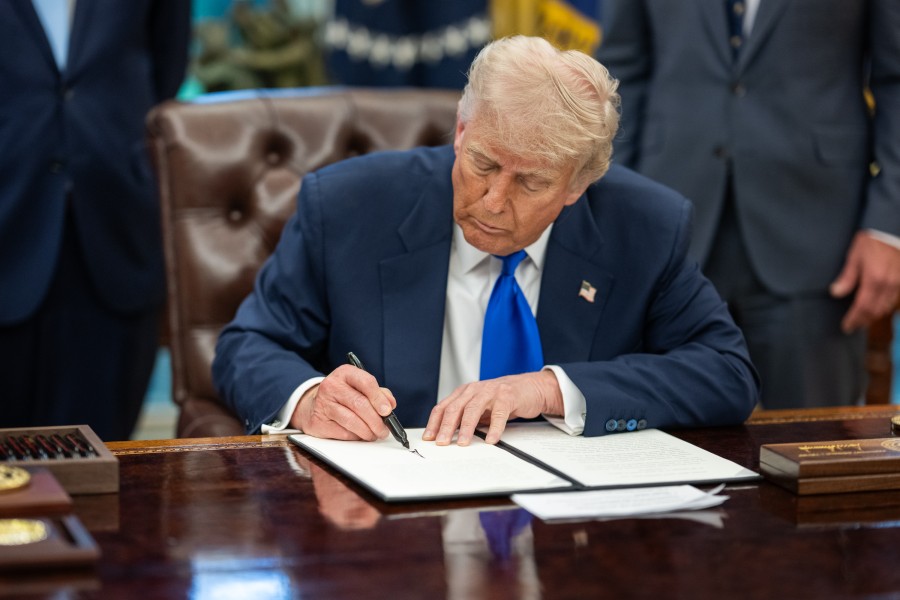
In a recent address from the White House, US President Donald Trump emphasized the nation’s readiness to take further action against Iran should it breach agreements designed to prevent the development of nuclear weapons. Trump underscored the critical importance of stopping Iran from acquiring such weapons, asserting that the dangers posed by nuclear proliferation overshadow any economic repercussions. He made it clear that the United States would respond if Iran violated its commitments or took actions that might destabilize the region.
Trump also celebrated the reopening of the Strait of Hormuz, calling it a significant success for global energy markets and international trade. This strategic waterway is vital for the transportation of oil and natural gas worldwide. The president’s remarks come as a delicate diplomatic engagement between Washington and Tehran unfolds, following a memorandum of understanding reached the previous week. This agreement involved maritime security and sanctions relief, with further discussions on Iran’s nuclear program set to occur over a 60-day negotiation window.
US Vice President JD Vance announced that Iran had permitted International Atomic Energy Agency inspectors to re-enter the country, labeling it a crucial move toward ensuring that Iran does not develop nuclear weapons. However, Iranian officials refuted this assertion, stating that no new commitments concerning the nuclear program had been made. Negotiators from Iran maintained that the discussions are ongoing, linking broader regional issues like maritime security and sanctions relief to future negotiations.
Despite US claims that energy shipments through the Strait of Hormuz have resumed to normal levels, independent shipping data suggests that vessel traffic has not yet returned to pre-conflict averages. This discrepancy highlights ongoing uncertainties regarding shipping activity in the region. Meanwhile, tensions persist in the broader Middle East, involving players like Iran, Israel, and Lebanon. Israeli officials have voiced concerns that the current diplomatic efforts do not sufficiently address Iran’s nuclear and missile capabilities.
The United States continues to assert its goal of preventing Iran from acquiring nuclear weapons, aiming to maintain regional stability through a combination of diplomatic efforts and deterrence strategies. As the situation develops, the international community is closely monitoring the progress of these negotiations and their impact on regional and global security dynamics.