
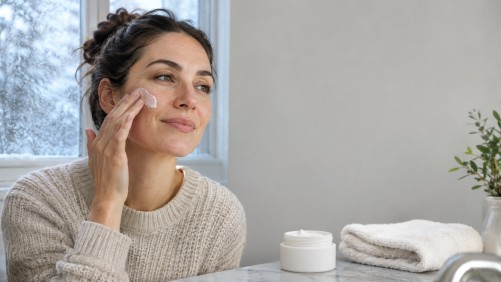
As temperatures drop in winter, maintaining skin health becomes a challenge due to cold weather, low humidity, and air pollution. These factors can lead to moisture loss, leaving skin feeling tight, rough, and irritated. However, a few simple adjustments to your skincare routine can help retain moisture and reduce irritation without needing an elaborate regimen.
Switching to a gentle facial cleanser is a crucial step. Harsh cleansers can strip away natural oils that protect the skin. Opt for a mild, hydrating cleanser to remove dirt and impurities while preserving moisture. It’s also advisable to use lukewarm water instead of hot water to prevent further moisture loss.
Regular moisturising is essential during the colder months. Cold air and low humidity can increase moisture loss, making the skin appear rough and flaky. Look for moisturisers with ingredients like glycerin, hyaluronic acid, and ceramides to attract moisture, support hydration, and strengthen the skin’s protective barrier. Applying moisturiser after cleansing can help lock in hydration.
Despite the colder weather, using sunscreen remains important as UV rays can still cause skin damage. A broad-spectrum sunscreen with SPF 30 or higher should be applied daily, especially during prolonged outdoor exposure.
Incorporating antioxidants into your skincare routine is beneficial for combating environmental pollution, which can lead to oxidative stress. Vitamin C is a popular antioxidant that can improve uneven skin tone and dullness. For those with sensitive skin, introduce new products gradually and discontinue use if irritation occurs.
While exfoliation helps remove dead skin cells, excessive exfoliation can exacerbate dryness and irritation. It’s important to keep exfoliation gentle and infrequent, focusing more on moisturising until the skin feels comfortable.
Maintaining healthy skin extends beyond topical treatments. Drinking enough water, eating a balanced diet, and getting sufficient sleep are vital for overall skin health. Additionally, using a humidifier indoors can help maintain moisture levels in the air, alleviating dry skin.
If persistent dryness, redness, or severe flaking occur, it may be time to consult a dermatologist. A professional can identify underlying causes and recommend appropriate treatments. Consistency in gentle cleansing, regular moisturising, daily sun protection, and healthy lifestyle habits are key to maintaining skin health throughout winter.