
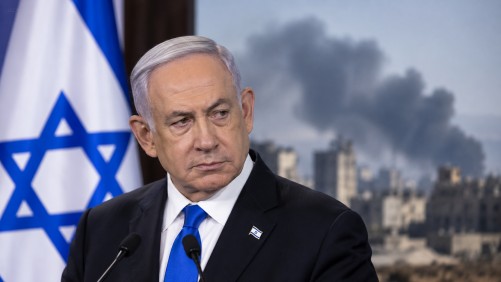
Calls for Israeli Prime Minister Benjamin Netanyahu’s resignation have resurfaced from opposition leaders following a report suggesting that he was allegedly forewarned by the United Arab Emirates about an impending Hamas operation prior to the deadly October 7, 2023 attack. The report claims UAE President Sheikh Mohamed bin Zayed Al Nahyan alerted Netanyahu about the planned assault after receiving intelligence indicating Hamas was preparing a significant offensive. However, Netanyahu’s office has categorically denied these allegations, labeling the report as false and asserting that no such conversation took place.
The controversy has amplified scrutiny over Netanyahu’s handling of security measures leading up to the October 7 attack. Opposition leader Gadi Eisenkot has accused him of neglecting repeated warnings, while former Prime Minister Naftali Bennett argues Netanyahu should accept direct responsibility and resign. The attack, described by Hamas leader Yahya Sinwar as an “earthquake,” reportedly reached the UAE leadership after being communicated through a former Palestinian official and an Emirati adviser.
The UAE’s diplomatic ties with Israel, established in 2020 under the Abraham Accords brokered by the United States, are considered a significant foreign-policy victory for Netanyahu. This relationship is now under a cloud, given the allegations that the UAE attempted to warn Israel of the impending threat. The October 7 attack resulted in the deaths of 1,221 people in southern Israel and led to 251 hostages being taken, according to Israeli reports.
In response to the attack, Israel initiated a military campaign in Gaza, which, according to the Gaza Health Ministry, has resulted in over 73,000 Palestinian deaths and widespread devastation across the territory. The allegations against Netanyahu have fueled ongoing debates about leadership and accountability in Israel, as the nation grapples with the aftermath of one of the most significant security breaches in recent years.