

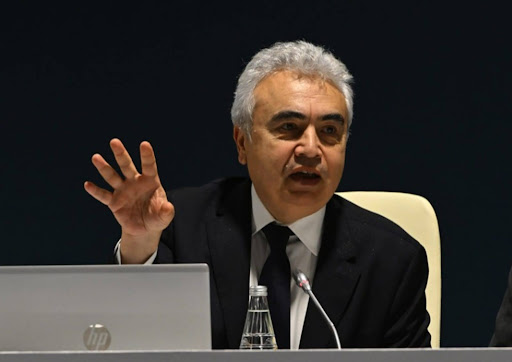
Fatih Birol, the chief of the International Energy Agency, has drawn a sobering historical comparison to explain the gravity of the current global energy situation. He told journalists in Canberra that the crisis sparked by the Iran war is equivalent in force to the 1970s twin oil shocks and the energy disruption caused by Russia’s invasion of Ukraine all at once. The statement reflects the extraordinary scale of destruction to global energy infrastructure since hostilities began in late February.
The bombings of Iranian energy targets by the United States and Israel, followed by the closure of the Strait of Hormuz, have removed 11 million barrels of oil per day from world markets. That figure compares starkly to the 5 million barrels per day lost across both 1970s oil crises. Natural gas losses from the current conflict, at 140 billion cubic metres, also significantly exceed the 75 billion cubic metres removed by the Ukraine war.
Birol revealed that at least 40 energy assets across the Gulf have sustained severe or very severe damage. Even a ceasefire, he warned, would not immediately restore normal energy flows given the extent of infrastructure destruction. The IEA responded with a record release of 400 million barrels from strategic reserves, which Birol acknowledged was only 20 percent of the agency’s total available stocks.
The strategic importance of the Strait of Hormuz cannot be overstated, as approximately 20 percent of the world’s oil supply flows through it. Disruptions to shipping in the strait have rippled across global markets, pushing prices higher and stoking fears of prolonged shortages. The IEA chief said the opening of the strait is the single most important step needed to begin stabilizing global energy markets.
US President Donald Trump issued a warning to Tehran that it faced the destruction of its energy infrastructure if it did not reopen the strait within 48 hours. Iran’s military responded by threatening to target energy and desalination facilities associated with the United States and its regional allies. Birol called for collective international action, stressing that no nation would escape the consequences of a prolonged crisis.
