

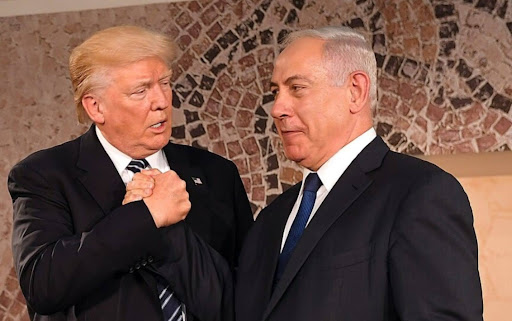
The US-Israel campaign against Iran is now deep enough to require serious thinking about how it ends — and it is precisely on that question that the two governments are most visibly divided. US President Donald Trump has articulated a clear and specific end state: an Iran that does not possess nuclear weapons. Israeli Prime Minister Benjamin Netanyahu has described something far more ambitious: a Middle East reshaped by the war, potentially with a new Iranian government in place. These are not compatible destinations, and the path to each leads through very different conflicts.
The divergence became acute when Israel struck Iran’s South Pars gas field — a target that fits Netanyahu’s expansive vision but sits outside America’s more focused campaign. Trump said he had warned against the move. The strike triggered Iranian retaliation, drove up global energy prices, and alarmed Gulf allies. Director of National Intelligence Tulsi Gabbard acknowledged in congressional testimony that the two governments have different objectives — a statement of unusual candor from a senior American official.
Netanyahu’s vision includes high-profile assassinations, economic infrastructure strikes, and operations designed to destabilize the Iranian political leadership. These go well beyond what Washington’s nuclear-focused strategy requires or sanctions. The South Pars strike was perhaps the most visible expression of that broader Israeli ambition — and the most direct collision with American preferences.
Trump has also retreated from earlier hints about supporting an Iranian uprising, calling it an unrealistic goal for a population without weapons. That retreat further narrows the American definition of success. Netanyahu, by contrast, has continued to call for internal Iranian resistance and framed the war as a chance to change Iran’s government. The two leaders are effectively negotiating, in public, about what victory means.
The inability to agree on an end state creates ongoing friction and complicates decision-making at every level of the conflict. Alliances work best when partners share not just a common enemy but a common vision of success. The US and Israel share the former. Their vision of the latter is more contested than either government typically admits — and that contest will shape the conflict’s duration, cost, and ultimate outcome.
