

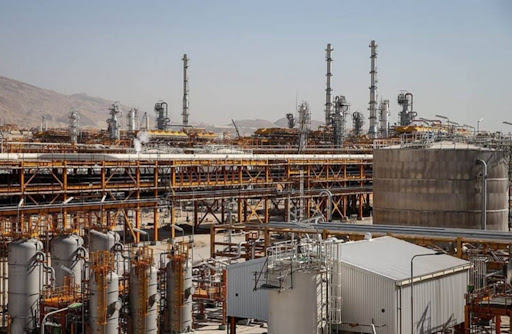
The conflict centered on the Strait of Hormuz deepened dramatically on Wednesday when Iran threatened to strike the Gulf’s entire energy network following an Israeli attack on the South Pars gasfield. The Revolutionary Guards named specific facilities in Saudi Arabia, the UAE, and Qatar and issued evacuation orders. Oil prices surged toward $110 a barrel as the threat of an energy infrastructure war reached its most acute level yet.
South Pars, the world’s largest natural gas reserve, is co-managed between Iran and Qatar. The Israeli strike on the field — reportedly with US consent — was the first attack on Iranian fossil fuel production in the conflict. The US and Israel had previously refrained from such a move, fearing it would trigger exactly the kind of sweeping retaliation that was now unfolding.
Iran’s state media named Saudi Arabia’s Samref refinery and Jubail complex, the UAE’s al-Hosn gasfield, and Qatar’s Mesaieed and Ras Laffan facilities as imminent targets. Workers and residents were instructed to evacuate without delay. Asaluyeh governor Eskandar Pasalar described the conflict as having entered a “full-scale economic war” phase and said the US-Israeli escalation had crossed a point of no return.
Brent crude rose nearly 5% to $108.60 a barrel, while European gas prices jumped more than 7.5%. Gulf oil exports had already been slashed by 60% from pre-war levels, a product of infrastructure damage and Iran’s Strait of Hormuz blockade. Iran had continued exporting its own crude through the strait uninterrupted, while its Gulf neighbors struggled to move any oil at all. The threat of strikes on Gulf energy facilities raised the prospect of a complete collapse in regional oil export capacity.
Qatar’s government spokesperson Majid al-Ansari warned that attacking energy infrastructure constituted a threat to global energy security and the environment. From Doha to Riyadh, Gulf governments were preparing contingency plans and assessing damage scenarios. The conflict had entered its most economically dangerous moment — one with the potential to reshape global energy supply and pricing for years to come.
